The question of how to treat neck wrinkles has a way of sneaking up on you. One day, your face looks smooth and well-rested — and the next, your neck seems to be telling an entirely different story. It's often the first place where time quietly leaves its calling card.
There's a biological reason for that. The skin on the neck contains less collagen and elastin to begin with, making it naturally more vulnerable to sagging, laxity, and wrinkle formation as we age. In other words, the neck ages faster — and it rarely waits for permission.
Why Neck Skin Ages So Quickly
Sun Exposure Is a Silent Saboteur
Ultraviolet radiation is one of the biggest accelerators of visible aging, especially on the neck — an area many people consistently forget to protect. "UV damage speeds up collagen breakdown and can dramatically worsen skin texture over time," says Dr. Tanya Kormeili, a board-certified dermatologist in Los Angeles.
Even brief, daily sun exposure adds up. The result? Crepey texture, discoloration, and deepening lines that no amount of concealer can disguise.
Weight Fluctuations Stretch the Skin
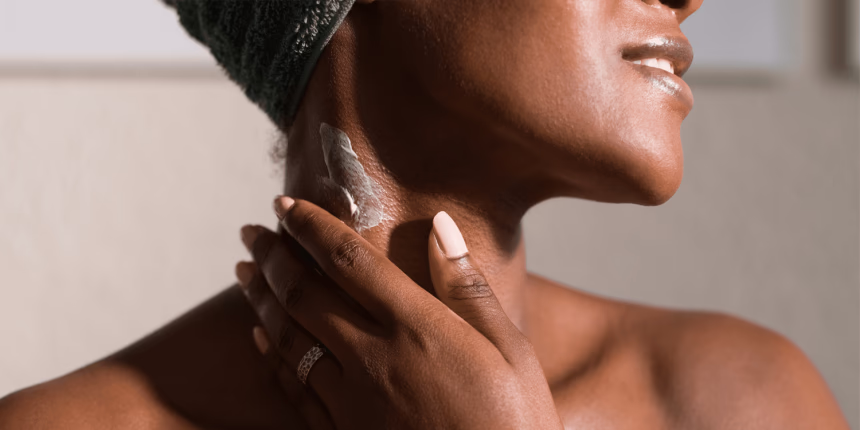
Significant weight gain or rapid weight loss can compromise the neck's already delicate elasticity. When skin stretches faster than it can adapt, it may not fully bounce back — leaving behind looseness and folds that feel stubbornly permanent.
Yes, Even Exercise Can Play a Role
Surprisingly, certain high-impact or neck-straining movements may contribute to premature aging. "Vigorous exercises that repeatedly engage the neck muscles can strain the area and contribute to visible aging," Dr. Kormeili notes. It's not an excuse to skip your workout — but it is a reminder that balance matters.
How to Treat Neck Wrinkles (Without Overcomplicating Things)
1. Extend Your Skincare — Literally
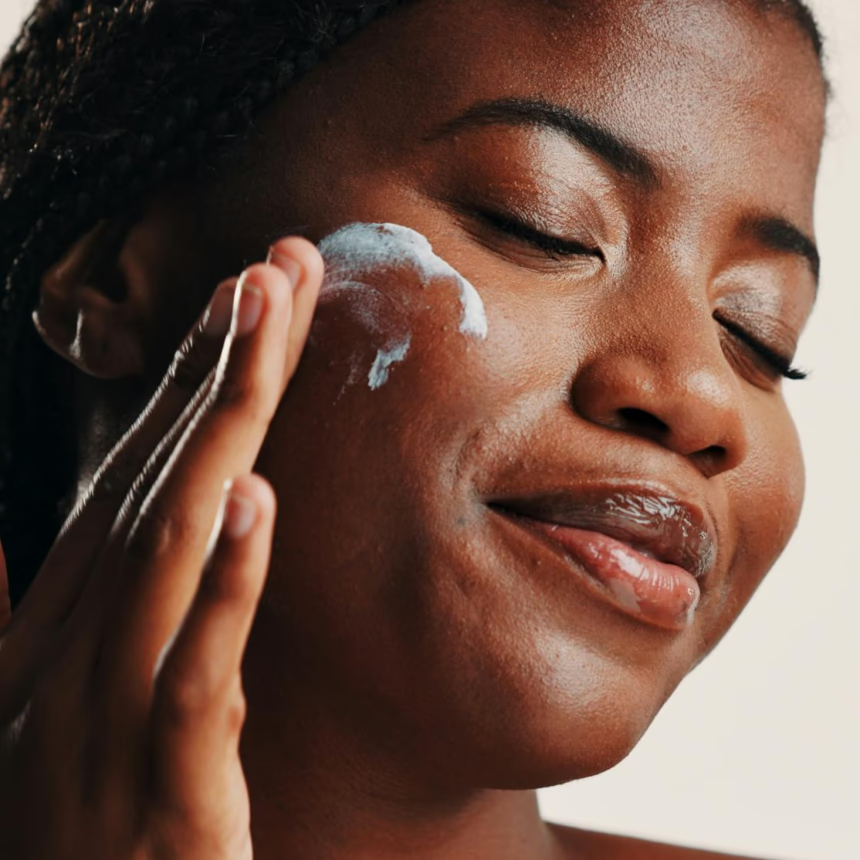
If your skincare routine stops at your jawline, it's time to rethink that boundary. Cleansers, serums, moisturizers, and retinoids should all travel downward. The neck needs the same attention as your face — no shortcuts.
Look for products containing:
- Retinoids or retinol to boost collagen production
- Peptides to support skin structure
- Hyaluronic acid for deep hydration
- Antioxidants to defend against environmental stress
Dedicated neck creams can make sense here, especially those formulated specifically for thinner, more delicate skin.
2. Sunscreen Is Non-Negotiable
Daily SPF isn't optional — it's foundational. Apply a broad-spectrum sunscreen with at least SPF 30 to your neck every single morning, rain or shine. This one habit alone can slow visible aging more effectively than any luxury serum.
3. Mind Your Posture and Muscle Strain
Constantly looking down at phones and laptops — often called "tech neck" — encourages repetitive creasing. Gentle neck stretches are fine, but avoid excessive strain. Small adjustments, like raising your screen to eye level, can make a noticeable difference over time.
4. Consider Professional Treatments

For more advanced wrinkles or skin laxity, in-office treatments may help. Dermatologists often recommend:
- Laser treatments to stimulate collagen
- Radiofrequency for skin tightening
- Microneedling for texture improvement
- Injectable treatments in select cases
These options aren't about erasing age — they're about restoring resilience and supporting the skin's natural structure.
Practical Tips
- Apply your entire skincare routine — cleanser, serum, moisturizer, SPF — from your forehead down to your décolletage. Make it a non-negotiable habit.
- Use upward, sweeping motions when applying products to the neck; downward tugging can contribute to laxity over time.
- Keep a travel-sized SPF in your bag or car for midday reapplication on the neck and hands.
- Raise your computer monitor or phone to eye level to minimize "tech neck" creasing throughout the day.
- If you're considering professional treatments, schedule a consultation with a board-certified dermatologist to discuss which option best suits your skin type and goals.
Conclusion
Neck wrinkles aren't a personal failure or a sign you did something wrong. They're simply the result of delicate skin doing its best under constant exposure, movement, and the passage of time. Treat your neck with the same care and consistency you give your face. Protect it. Nourish it. And above all, be patient — meaningful skin changes happen slowly, not overnight. A smoother, stronger neck isn't about chasing youth. It's about caring well for the skin you're in, at every stage.
FAQ
Q: Why does neck skin age faster than facial skin? The neck contains less collagen and elastin than facial skin, making it naturally thinner and more vulnerable to sagging, crepiness, and wrinkle formation as we age.
Q: What is "tech neck" and how can I prevent it? "Tech neck" refers to the repetitive creasing and strain caused by constantly looking down at phones, tablets, and laptops. Prevention involves raising screens to eye level, taking regular breaks, and maintaining good posture throughout the day.
Q: Should I use a separate neck cream or can I use my regular moisturizer? While your regular moisturizer is better than nothing, dedicated neck creams are often formulated for thinner skin and may contain higher concentrations of peptides, retinoids, and firming ingredients specifically targeted to the neck area.
Q: How long does it take to see results from neck skincare treatments? Consistent at-home care typically shows subtle improvements after 8-12 weeks. Professional treatments like laser or radiofrequency may yield more noticeable results but often require multiple sessions spaced weeks apart.
Q: At what age should I start incorporating neck care into my routine? Dermatologists recommend starting neck care — especially daily SPF application — in your mid-to-late twenties as a preventive measure. The earlier you build the habit, the better your long-term results will be.