If you've ever fallen down a skincare rabbit hole at midnight, you know the feeling: yet another ingredient promising smoother skin, brighter tone, fewer lines, more glow. The beauty world cycles through trends like seasons — collagen boosters one year, retinol reformulations the next, bakuchiol quietly stepping in as a gentler alternative.
But some ingredients don't arrive with fireworks. They slip in quietly, earn trust slowly, and then refuse to leave. Copper peptides are one of those rare discoveries. They're not flashy. They don't sting or tingle. And yet, among dermatologists, formulators, and deeply committed skincare devotees, copper peptides are being discussed as one of the most elegant anti-aging ingredients available today.
What Exactly Are Copper Peptides?
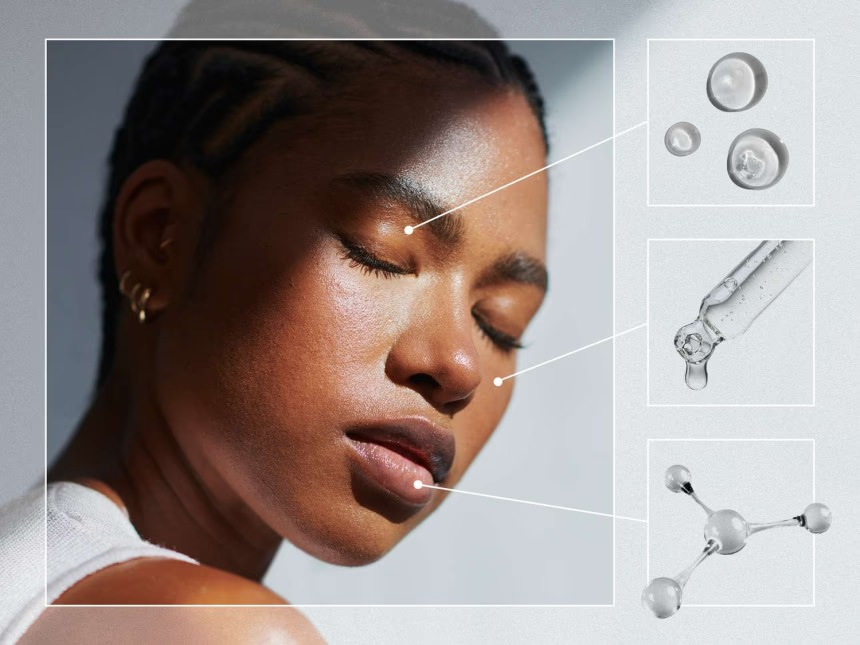
At their core, copper peptides are small protein fragments bonded to copper ions. That might sound clinical, but their role in the body is anything but artificial. Copper peptides occur naturally in human plasma, saliva, and tissue. They've been studied for decades — not originally for beauty, but for their remarkable role in wound healing and tissue repair.
In skincare, this matters enormously. Copper peptides act like microscopic messengers, signaling the skin to repair itself more efficiently. They support collagen and elastin production, help improve skin density, and encourage healthier cellular turnover — all without forcing the skin into overdrive.
Think of them less as a drill sergeant and more as a calm, experienced coach.
Why Copper Peptides Are Different From Other Anti-Aging Ingredients
Many popular anti-aging actives work by stressing the skin just enough to trigger renewal. Retinoids accelerate cell turnover. Acids exfoliate. Vitamin C stimulates collagen through controlled irritation.
Copper peptides take a fundamentally different route. Instead of pushing, they restore. They help strengthen the skin barrier, improve resilience, and reduce inflammation — all while still supporting visible anti-aging benefits. Over time, this can mean skin that looks firmer, smoother, and more even — but also skin that feels calmer and more balanced.
For people with sensitive skin, compromised barriers, or long histories of over-exfoliation, copper peptides can feel like a deep, restorative exhale.
The Anti-Aging Benefits That Keep Showing Up

Regular use of copper peptides has been linked to:
- Improved skin firmness and elasticity
- Reduced appearance of fine lines and wrinkles
- More even skin tone and texture
- Enhanced healing and barrier repair
- Softer, stronger, more resilient skin over time
What's notable is how gradual and believable these changes are. Copper peptides don't promise overnight miracles. They deliver slow, compounding improvements — the kind that sneak up on you when you realize your skin just looks healthier.
Why They're Trending Now
The rise of copper peptides mirrors a broader shift in skincare culture. Consumers are moving away from aggressive, high-intensity routines and toward products that support skin longevity — formulas that work with the skin long-term rather than shocking it into submission.
As more people experience irritation fatigue from overuse of potent actives, ingredients that prioritize repair, communication, and balance are finally getting their moment. Copper peptides fit neatly into that philosophy.

They also layer well with many routines, making them a versatile addition whether you're minimalist or maximalist in your approach.
How to Use Copper Peptides Wisely
Copper peptides work best in formulas specifically designed to support them. They're often found in serums or creams intended for evening use, though some gentle formulations are suitable for both morning and night.
One important note: copper peptides don't always play well with strong acids or pure Vitamin C in the same routine. Many skincare experts recommend separating them — copper peptides at night, Vitamin C in the morning. As always, consistency matters more than intensity.
Practical Tips
- Introduce copper peptides gradually — start with every other evening before moving to nightly use.
- Use them after cleansing and before moisturizer for optimal absorption.
- Avoid using copper peptides in the same routine as high-concentration Vitamin C or strong exfoliating acids to prevent potential interactions.
- Pair copper peptides with a simple, barrier-supporting moisturizer and daily SPF for the best long-term results.
- Be patient — meaningful improvements typically take eight to twelve weeks of consistent use to become visible.
Conclusion
Copper peptides aren't loud. They don't chase trends or rely on dramatic before-and-after photos to prove their worth. But in a world increasingly drawn to sustainable beauty and genuine skin health, they've more than earned their place. They're the kind of ingredient you grow into — and once you do, it's hard to imagine your routine without them. Not a miracle cure. Not a shortcut. Just smart, patient skincare doing exactly what skin needs most.
FAQ
Q: What are copper peptides and how do they work? Copper peptides are small protein fragments bonded to copper ions that naturally occur in the body. In skincare, they act as cellular messengers — signaling the skin to repair itself, boosting collagen and elastin production, and supporting healthier turnover without causing irritation.
Q: Can copper peptides be used with retinol? Many experts recommend using them on alternate nights rather than layering them in the same routine, as both are potent actives. Some formulations are designed to be compatible, but introducing them separately is the safest approach.
Q: How long does it take to see results from copper peptides? Most users report visible improvements in skin texture, firmness, and overall health after eight to twelve weeks of consistent use. Results are gradual and cumulative rather than immediate.
Q: Are copper peptides suitable for sensitive skin? Yes — copper peptides are generally well-tolerated and are often recommended specifically for sensitive or compromised skin because they work by supporting and restoring rather than irritating.
Q: What should I avoid using with copper peptides? Avoid using them in the same routine as high-concentration Vitamin C (L-ascorbic acid) and strong exfoliating acids (AHAs/BHAs), as these can destabilize the peptides or cause irritation. Separate them into different routines — morning vs. evening — for best results.